Maaike Meeuwsen on the Amsterdam Law Firm: 'You always take your skills with you'
Maaike Meeuwsen on the Amsterdam Law Firm: 'You always take your skills with you'

How did you end up at the Amsterdam Law Firm?
'I studied law and then took the Master's in Intellectual Property Law in Utrecht. After that, I worked as a media lawyer for a film producer, handling contracts for actors and crew. That work was interesting, but also commercial. I noticed that I was looking for more social impact and more human contact. Then the vacancy for skills teacher at the University of Amsterdam came along.'
"Skills remain relevant throughout your career"
'I have always found it important to pay attention to skills in education. In law school, the emphasis is often on content and exams. Whereas your skills remain important throughout your career. Whether you become a lawyer or do something completely different, good writing, presentation and collaboration will always come back.'
What do students do at ALF?
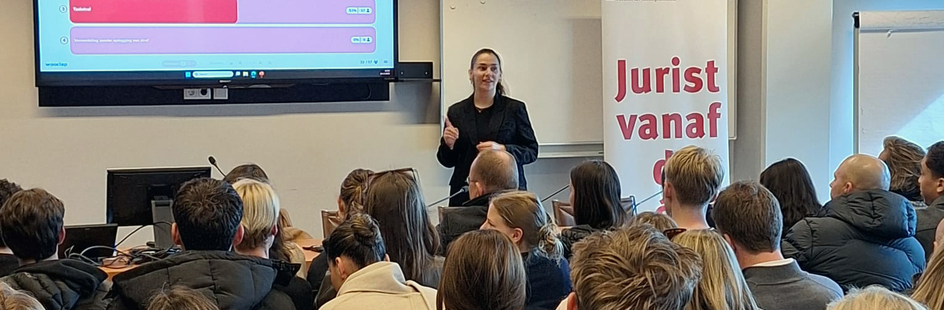
'At the Amsterdam Law Firm, I teach skills to first- and second-year bachelor students. Students crawl into a different role each block. For example, you represent a country during an article negotiation. In another block, you take on the role of mediator and practice conversation techniques. In this way, you get to know the practice in an active way. We really bring the motto "Jurist vanaf dag 1" to life there.'
What makes you happy as a teacher?
'It is very nice when you explain something that students find difficult, and you see the penny drop. Especially when you experience students from the beginning of the first year and see how much they grow. I am also a mentor. Students can come to me if they are struggling with something, for example, working together or presenting. I get a lot of energy out of helping students, also when it comes to personal questions'.
What are you proud of?
'Especially now in the second year, I notice that I see students from the first year who have grown a lot. The fact that I contributed to that gives me so much satisfaction. In the end, of course, they do it all themselves. I just think it's great to witness that development. It is great to hear that they find my teaching enjoyable and supportive, and that they know where to find me if they have questions. That is also something I am really proud of.'
You are also involved in the Dialogue Network. What does that mean for students?
'As a facilitator, I guide conversations between students and staff at the Dialogue Network. The idea is that there is space to talk about issues of concern. That space alone can provide new insights. I try to impart that open attitude in my teaching as well.'