
Joost Krijnen confidential adviser at Science Park
Joost Krijnen confidential adviser at Science Park
Who are you and how did you get into this position?
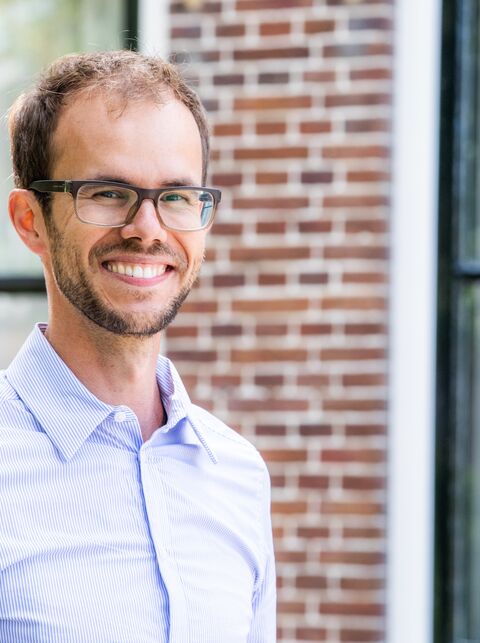
My name is Joost Krijnen and I am a literary scholar by training. Since 2016, I have worked as a lecturer and tutor at Amsterdam University College at Science Park. A few years ago, I read a post in a UvA newsletter in which a professor talked about her work as a confidential adviser. She said that, as a confidant, she could really support people who had experienced undesirable behaviour at work or during studies. This really appealed to me and I then took action to see if I could do this work, too.
Why did you become a confidential adviser?
One of the best aspects of working in university education is that you can really have an impact on students. It gives me great satisfaction when I can help and advance students through my teaching or through individual guidance in my job as tutor. The role of confidential adviser appeals to me for the same reasons. I like it when I can help or support others, especially when they experience problems, because it makes me feel that I'm doing meaningful and valuable work.
What kind of questions or problems can we come to you with?
I am a confidential adviser for undesirable behaviour and integrity. Undesirable behaviour involves things like bullying, (verbal) aggression, discrimination and sexual harassment. Integrity issues can include all kinds of malpractices, small or big, including abuse of power, conflicts of interest, theft, or—to name something very specific—faulty handling of equipment or chemicals that could lead to unsafe situations. Students and staff are also welcome to contact a confidential adviser when they are not sure if their experiences fall under the headings of 'undesirable behaviour' or ‘integrity issues’. If people have experienced things they found annoying, unpleasant, or ‘strange’, they may always reach out to a confidential adviser to talk about these experiences in confidence.
What is an important job of a confidential adviser?
During my training, I learned that listening well is very important, and that this is easier said than done. For example, it is important not only to listen carefully to what exactly happened, but also to be attentive to the sometimes intense emotions associated with those experiences. Listening well means giving space to reporters to tell their story in their own way and at their own pace. And that includes not talking too much yourself, permitting silences to occur and not trying to fill them up yourself.
How do you deal with reports?
When a report comes in, I contact the reporter as soon as possible to schedule a meeting. Such a meeting can take place either online or on location (like at AUC). It’s important that all conversations with a confidential advisor are of course confidential! The purpose of this initial conversation is to discuss what happened exactly and to establish if undesirable behaviour or an integrity issue is at stake.
The outcome of the meeting depends on the situation and on the wishes and needs of the reporter. Sometimes just having this one meeting suffices, for instance when a person mainly wants to get their story off their chest. Sometimes I will refer the person to someone else (the study advisor, the GP, and so on), for example when something else is at stake than undesirable behaviour or integrity. When such things are in fact at stake, we will often plan a second meeting during which we’ll explore the options available to the reporter, as well as the pros and cons of each. Depending on the reporter's wishes, confidential advisers can also support reporters with whatever follow-up steps they've chosen, like accompanying them to a meeting with a supervisor or the person who engages in undesirable behaviour, or filing a formal complaint.
What makes your work special?
There is a personal story behind every report, and it is often a story full of strong emotions such as pain, sadness, shame or anger. For people who have experienced undesirable behaviour, it can be very difficult to talk about their experiences. Because of the very personal and often emotional characteristics of each case, it is special when people confide in you and share their story with you. And it is also special when, as a confidential adviser, you can be of support to a reporter and play a role in finding solutions.
Why is it important for the Faculty of Science to pay attention to Social Safety?
The great thing about a university like ours is that people work, study, teach, and do research at the highest level, and all this in a large and complex organisation, in which many and very diverse people are involved. But at the same time, these are also characteristics that can lead to undesirable behaviour. Indeed, ambitions run high, the stakes are high, and relationships between individuals are often accompanied by large differences in hierarchy and power (for instance a student writing a thesis can be very dependent on their supervisor). Precisely because there are certain risk factors present within our organisation, it is very important that social safety in the workplace is high on the agenda. It is also important that there are low-threshold and low-risk ways to talk about undesirable behaviour and integrity. And that is precisely why there are confidential advisers.
Read more about the UvA's confidential advisers.