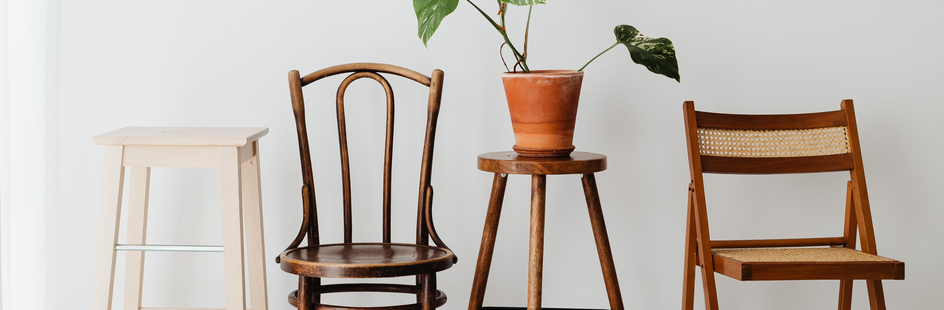
From old to new again: circular furniture at the UvA
From old to new again: circular furniture at the UvA
In some places within the UvA, circular furniture can already be seen. For new buildings, housing projects and renovations, furniture has already been partially reused. With the new contracts and the service provided by Facility Management, this circular approach can now be applied organisation-wide and in a structural way. Maximising the lifespan of our furniture through repair and smart reuse
Maximising the lifespan of our furniture through repair and smart reuse
We extend the lifespan by repairing furniture and maintaining it properly. If needs change, we adapt the piece of furniture or use it in a different way. If that really is no longer possible, we purchase new circular furniture. Furniture that we no longer use is taken over by our furniture supplier to be used again at another organisation. In this way, we expect to need 92% less new furniture.
Insight into the furniture we have in house
To work in a truly circular way, you need a clear overview. That is why around 46,000 pieces of furniture have been inventoried: type of furniture, condition, location, colour and more. All this data is stored in a furniture management system.
An important link in this is the UvA Furniture Hub. Existing furniture that is not being used is temporarily stored there.
When there is a new request for furniture, we first check whether there is already something that can be reused or adapted. Only if there is no good match, new furniture is ordered that is circularly designed and has a long lifespan. This way, we manage our stock better, find matches between supply and demand more quickly and schedule maintenance at the right time.
Less CO₂, less waste, more impact
This way of working has a major impact. CO₂ emissions are reduced by about 86%, the lifespan of furniture generally becomes four times longer, and far fewer new raw materials are needed. It also creates jobs: refurbishing generates employment opportunities for people with a distance to the labour market.