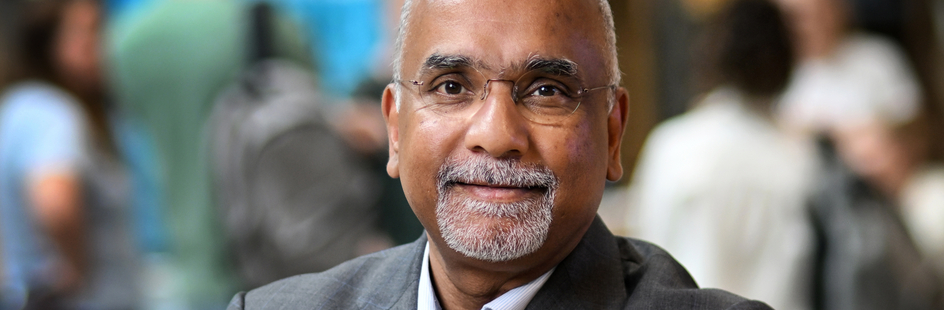
Five questions for Vinod Subramaniam, the new president of the Executive Board of the UvA
Five questions for Vinod Subramaniam, the new president of the Executive Board of the UvA
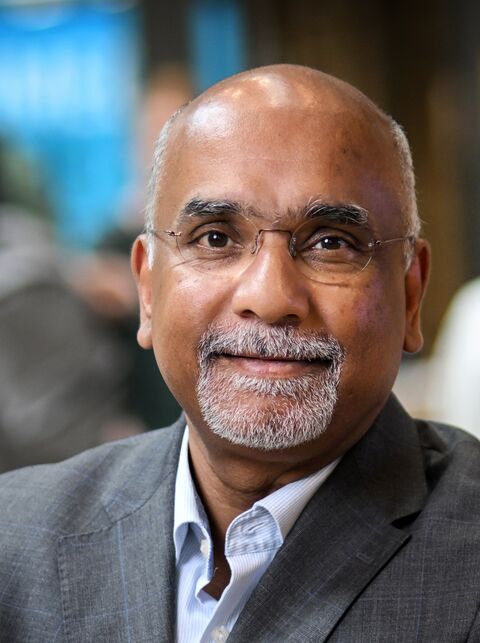
You were previously rector magnificus of the VU, then president of the University of Twente, and you are now returning to Amsterdam as president of the Executive Board of the UvA. Does it feel like moving house or coming home?
‘In fact, it is both. Professionally, it feels like moving house: I am entering a new organisation, with its own history, culture and dynamics. That requires carefully looking, listening and understanding how things work here before you can really start to move along with it and help shape it.
‘At the same time, Amsterdam feels like coming home to me. I know the city well, I have lived and worked here for a long time, and I feel at home in the Amsterdam ecosystem of universities, universities of applied sciences, MBO institutions, cultural organisations and social partners. That network is familiar. That combination – a new professional environment in a city that feels familiar – makes this step particularly attractive for me.’
Even when you were working in Twente, you continued living in Amsterdam. Where might we run into you in the city?
‘There is a good chance you will just run into me walking or cycling somewhere in my Plantage neighbourhood, or on my way to an appointment. I like moving through the city on foot or by bike; that is perhaps the best way to keep really seeing and feeling Amsterdam.
‘I can also regularly be found at the Concertgebouw – music is an important outlet for me, whether it is Bach or blues. And you might easily bump into me in bookshops such as Athenaeum or the American Book Center. On the pile at the moment: Scarcity by Sendhil Mullainathan and Eldar Shafir; The Loneliness of Sonia and Sunny by Kiran Desai. Those are places where I like to browse and pick up new. That mix of everyday and cultural places is what makes Amsterdam such a pleasant city for me to live in.’
You already know the city, but you do not yet know the UvA from the inside all that well. What is the first place or group at the UvA that you consciously want to visit without a script, just to listen?
‘My first instinct is: to go to the places where knowledge, culture and society are closely intertwined. I am thinking, for instance, of the Faculty of Humanities and the Faculty of Social and Behavioural Sciences. That is where major questions about language, culture, power, identity and society come together – issues that are very much alive in Amsterdam.
‘I think it is important not to turn up there with a fixed script or a long PowerPoint, but mainly to listen. In small groups, with students, lecturers, researchers and support colleagues. What is going well, what are people running up against, what is already being solved? I see those kinds of conversations, in different parts of the university, as starting points for my work here.’
The VU and the UvA are only a short bike ride apart, but each has its own history and culture. Where do you see promising or exciting opportunities to work more closely together in Amsterdam?
‘If, as universities, you really want to have meaningful impact on society, you can never do that alone. You have to work together. Of course, I am thinking then of the UvA and the VU, but we should not forget the full breadth of the Amsterdam educational landscape: the Amsterdam University of Applied Sciences and other universities of applied sciences, but also MBO institutions such as the ROC van Amsterdam.
‘Amsterdam faces major metropolitan challenges: housing, health, digitalisation, sustainability and social inequality. Universities, universities of applied sciences and MBO institutions each bring their own perspectives, talent and expertise. I believe that together we can contribute a great deal to broad social issues as well as specifically Amsterdam-related topics. I am very much looking forward to that shared responsibility and the opportunity to contribute to the city.’
What do you think (or hope) that (former) colleagues would say if we asked them: ‘What kind of president is the UvA actually getting?'
‘I hope they would say: someone who is good at listening and at making surprising connections and links. I think it is important to give people the space to tell their story, even if that story is critical or uncomfortable. Only by truly listening can you begin to see where connection is possible between people or groups who do not naturally seek each other out.
‘In addition, I hope they would describe me as approachable and curious. I enjoy talking with a wide variety of people – from first-year students to professors, from colleagues in catering to administrators in the city. If we manage to connect that diversity within and around the UvA more effectively, the university will gain an even stronger voice in Amsterdam and beyond.’