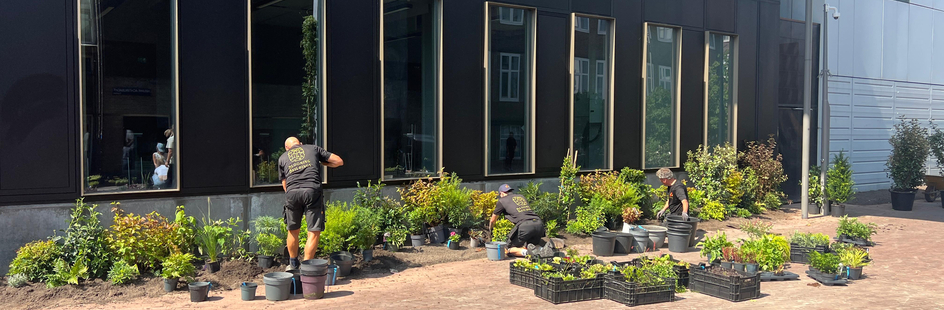
Roeterseiland Campus is a bit greener: over 200 plant species placed
Roeterseiland Campus is a bit greener: over 200 plant species placed
Benefits of the plants
The plants, for example, provide food for birds and insects, help capture rainwater during heavy showers, provide cooling on hot days, and make the environment more pleasant and healthier for students, staff and local residents.
Pilot - a first step
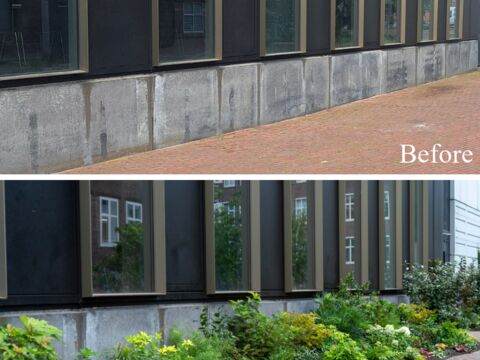
The new borders are the result of a pilot project investigating how the campus can be greened as sustainably as possible and is a first step towards a climate-adaptive and nature-inclusive* university. Blooming Buildings carried out the project on behalf of the University of Amsterdam (UvA) and Facility Services.
What is growing and blooming?
A conscious choice has been made for a mix of organic native and non-native species. Native plants promote local biodiversity, while non-native species are more resilient to climate change.
Soil improvers, natural shelters, nectar and winter greenery
Many different plants have been placed to create a rich variety of species, the basis for biodiversity. In the borders, you will find, among others, heuchera, thyme, glass bells, cranesbill and St. John's wort: plants that not only provide nectar to insects but can also serve as host plants. The ground covers offer shelters to animals and stimulate a healthy soil life full of microorganisms, essential for the growth and vitality of all plants. And thanks to the ferns, you will also see greenery in winter.
Measuring is knowing: soil samples and Bird Buddies
“Beforehand, we conducted baseline measurements by taking soil samples and looking at the number of microorganisms. Bird Buddies have also been hung up, these are monitoring boxes that register the number of different bird sounds. Three months after planting, we measure again to see what effects the greenery has already had.” – Tobias Witteveen, Blooming Buildings.
Working together with research and education on more greening
The campus serves as a living lab in this pilot, where scientists, students and green designers share knowledge and together investigate the impact of how we design the campus. For example, students from the Master's programme ‘Urban and Regional Planning’ are currently working on further green solutions for the campus, which they will soon present to a jury of UvA stakeholders.
Discover it yourself, come and have a look!
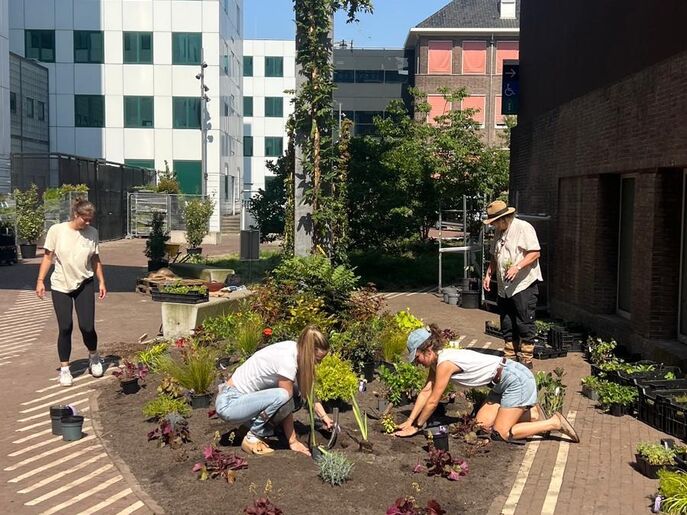
You will find the borders at REC E. The plants need some time to flourish, but the difference is already visible. Take a leisurely walk and experience what this extra bit of greenery does for your perception of the campus. If you happen to see someone working in the borders and want to know more, feel free to ask: these experts are happy to tell you more.
Climate-adaptive: making the campus resilient to climate change. This means that the buildings and public spaces are resistant to flooding, long periods of drought and (better) protected against heat stress.
Nature-inclusive: enhancing biodiversity and improving the well-being of humans and animals.